
Halo 2 is very important to me. While I didn't grow up playing the game (I first booted it up on my shitty touchscreen laptop in 2020), I instantly fell in love with it, just as I had the first one. I lost hours in the cold corridors, open vistas, and endless arenas. Countless late nights, weekends, and hours that most definitely should have been spent studying were spent on the game's multiplayer, which I still suck at. I couldn't run Master Chief Collection, so I resorted to the excellent Project Cartographer community servers and to my surprise, there was no shortage of players, nor fun to be had. One of my favorite memories playing Halo 2 was 1v1ing my friend on a custom Spongebob themed map, with custom music, models, and the entire Bikini Bottom to frolic around in. We're no longer friends, but the memories carry on forever. One of the coolest things about the game, for me at least, has to be the nu metal cuts. I was raised on nu metal, and have listened to the music of Breaking Benjamin, Incubus, and Hoobastank since childhood, so imagine my surprise finding this game and it's surrounding media chock full of the music that I grew up with. I think that's one of the reasons why, despite Halo 2 not even being my favorite in the franchise, I love it so much. In an era where I was entirely isolated and painfully alone, I could lose myself for entire evenings in a world wholly anew, but with just the right amount of familiarity to it. The game itself is old enough to drink now, and seeing as it's the anniversary of it's release, I thought it fitting to dive into the game's development history, the game itself, its impact, and, most importantly, how the hell it's nu metal. So grab your Halo 2-themed Slurpee and buckle in.
How do you follow up one of the most influential games of all time, a colossal space opera adventure that revolutionized the FPS genre and redefined what a console shooter could be? It's quite simple, really. That space opera? It's a rock opera now, motherfucker. Halo: Combat Evolved changed everything, but Halo 2 looked at what people liked with Halo: CE, cranked it up to eleven, and hit it over the head with Steve Vai's guitar. However, to fully analyze Halo 2, we must look back at what came before.
In November of 2004, @Halo 2 was released! I played guitar on the theme song & it was an amazing experience. Here's a clip of the studio session with @nilerodgers. pic.twitter.com/Un7dTMJkSh
— Steve Vai (@stevevai) November 10, 2021
Bungie was created in 1990 by Alex Seropian, a rebellious response to his father suggesting he seek employment. After releasing a pong clone called "GNOP", and officially founding Bungie, at the time named Bungie Software Projects Corporation, he would meet fellow programmer Jason Jones at the University of Chicago. The studio would expand with subsequent projects, all being developed for the Macintosh OS, with notable releases including the FPS Pathways into Darkness , the RTS Myth, and the Marathon FPS trilogy, with the latter being the most well known of bungie's earliest releases, and a crucial piece of Halo's eventual DNA. What originally began as a sequel to Pathways Into Darkness quickly evolved into Marathon, Bungie's first sci-fi FPS, releasing in December of 1994. Marathon was praised for it's combat and interconnected lore, providing Mac users an alternative to DOS games like Doom and System Shock. The game would receive two sequels, Marathon: Durandal and Marathon: Infinity, released in 1995 and 1996 respectively. Following the success of the Marathon trilogy, Bungie would revisit their fantasy RTS series Myth, and in 1998 Myth II: Soulblighter was released, albeit with a serious issue. In the original shipped version of the game, if you installed the software anywhere but the default folder, upon uninstalling the game you would be met with every single file on your hard drive being wiped as well, bricking it. Believe it or not, this turned out to be a major problem for Bungie, as most people tend to like their files remaining on their drives. Bungie was forced to recall all 50,000 copies of the game, costing the studio an estimated $800,000 to $1 million loss.
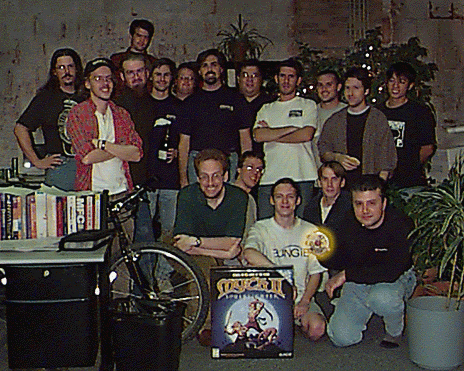
It was around this time that Bungie saw a gap in the RTS market, as all the big sci-fi titles like Starcraft lacked a 3D space, unlike their Myth series. Working under the title Blam!, the game quickly evolved, and changed forms. From RTS, it would turn into a shooter titled Armor and even an RPG called Monkey Nutz (I do not know why). After seeing how enjoyable hands-on vehicle controls were, and how close the camera angles became, it became clear that making the game a shooter was the best course of action. Come 1999, what Bungie had was shown off behind closed doors at E3, with journalists signing heavy NDAs. Buzz quickly began to spread about the team's mystery project and it wasn't long until Steve Jobs himself was interested. He had recently hopped back in the driver's seat of Apple, determined to steer the company away from the tree it was barreling towards. In a time where games like Quake and Half-Life dominated the market, primarily on Microsoft PCs, Jobs was looking for ways to prove the worth of the Mac for gaming. Yes, Apple wanted to focus on gaming. It truly was a different era. After wooing Jobs with their prototype's real-time sun flares, something Jobs noted wasn't possible even at animation studios like Pixar, the team secured a spot at the 1999 Macworld showcase, which was only weeks away. The game still had yet to be named, either. Covenant was briefly considered, before environmental artist Paul Russell ultimately decided on Halo. The demo had no soundtrack until days before the event, when Martin O'Donnell wrote the iconic theme on his way to work, incorporating the Gregorian chants of monks into intense drums and heavenly strings. The result is something that sounds both ancient and bombastic and at the same time.
Macworld was a hit, with Bungie's Halo quickly generating hype, becoming one of the most anticipated games across 3 different continents. However, the cracks were starting to show. Halo was far from finished, and the studio was rapidly running out of money. This was happening at the same time as Microsoft was looking for first-party titles for the Xbox, set to be revealed to the public soon. Enter Ed Fries, head of Microsoft Game Studios, and a longtime fan of Bungie Games. Coincidentally, Fries was looking for a game exactly like Halo to add to their catalogue games available on launch. Microsoft made an offer, and Bungie leapt at it. Selling was in the back of the heads of Bungie for quite some time, ever since engaging in talks with Activision, around the time of Marathon's launch. After a brief move from Chicago to Redmond, the real work began, and boy, was there a lot of it. Bungie was given about 10 months to turn their souped-up tech demo into a launch title for a brand new console. Development for console shooters was already scarce, save for Rare's work on Goldeneye 007, Perfect Dark. The majority of console shooters were ports of pre-existing PC titles, like Quake and DOOM. Despite their aversion to making another FPS after the Marathon Trilogy, Bungie felt first person was the best perspective for the camera, as the triggers of the Xbox Controller felt similar to the triggers of a gun. Little-by-little more breakthroughs began to happen. Jaime Griesemer had the idea to make the character's aim "soft-lock auto aim", magnetizing the reticle to enemies, rather than the hard lock-on. Future Soldier, the player character, would be renamed Master Chief, but with every breakthrough came cuts, and the crunch began to pile up. Gone was the open world, the realistic day/night cycle, and more than half of the game's planned missions were cut. The multiplayer was almost cut entirely, until the team cobbled something together towards the very end. Developers were sleeping at their desks for months just to ship the game on time, and ship on time it did. On November 15th, 2001, Halo: Combat Evolved was released to widespread acclaim. The team at Bungie, the definition of the underdog, had done it. In under a year, they made a masterpiece and revolutionized the shooter genre, coming out of hell kicking and screaming. The game was praised on all fronts, especially in it's rich world building, endlessly fun gameplay, and amazing music.
Five months after the game came out, a sequel was greenlit, and in early 2002, less than a year after the release of Halo:CE, work on the game began.
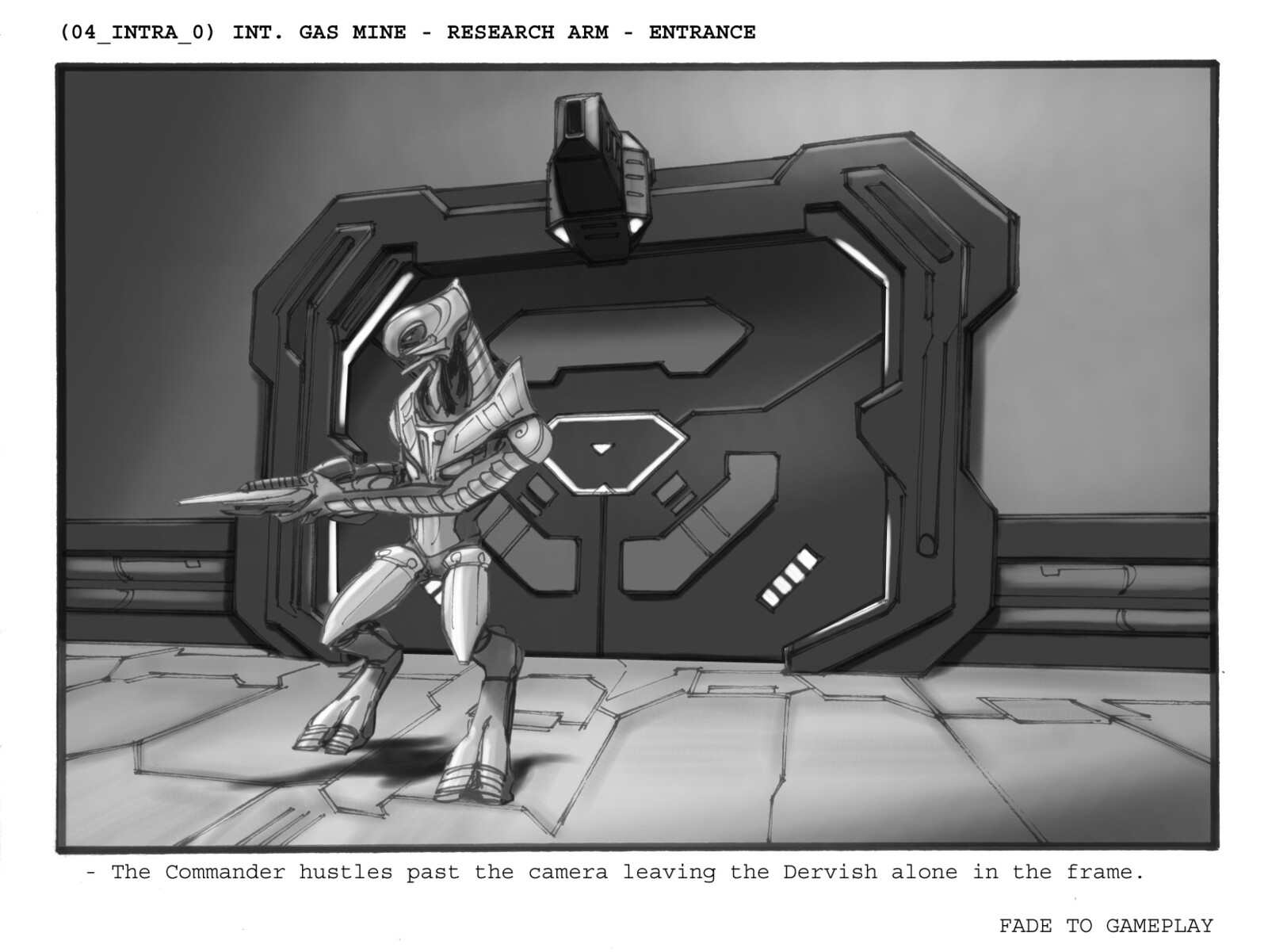
Early talks about where the team wanted to take the story, led by cinematics director Joseph Staten, turned on the game's main enemy faction, The Covenant. An idea was proposed: What if you were the guy responsible for the loss of your religion's most important artifact?
From that idea came the Dervish, later changed to the Arbiter to avoid Islamic appropriation. Not all were sold on this concept, namely art director Marcus Lehto and composer Marty O'Donnell (the jokes write themselves), but Staten managed to convince them via the opportunity to explore the Covenant in a much more interesting fashion.
While Halo 2 began to take shape at Bungie, Microsoft were prepping the launch of their online service, Xbox Live. Sega had tried and failed at something similar, shutting down their own online service, Sega Net, in 2001.What separated Xbox Live from Sega Net was Xbox's use of broadband internet and internal hard disc drives (HDDs). This guaranteed quick load times and steady connections. Microsoft wanted Halo's follow-up to be a flagship, and Jones agreed. Microsoft originally wanted the game to launch alongside the Xbox Live service, with executives voting in favor of it until Ed Fries threatened to leave Microsoft if they pushed the game out of the door early.
"I'm going to quit right now if that's what we're going to do".
While Fries was able to sway Microsoft's higher-ups, he still resigned 6 months later, citing displeasure with the atmosphere brewing within. He didn't like how they handled business, especially during that meeting.
For a large chunk of Halo 2's development time, the multiplayer included a Player-vs-player-vs-enemy (PvPvE) mode that was cut from Combat Evolved, something which would eventually be implemented in Halo 5's Warzone mode. It was planned to be the only mode for a brief period, ditching LAN, splitscreen, and arenas entirely, before multiplayer lead Max Hoberman stepped in, saying that Halo's multiplayer was beloved, even if it wasn't what they had originally envisioned, and they shouldn't betray that by doing away with it. Seropian and Jones echoed this sentiment, placing Hoberman in charge of the arena mode, still meant at this point to act as an additive to the main warzone mode. It was around this time that as the game grew in size, it also started to bloat and breakdowns in communication were happening. Everyone had their own idea as to what the game should be, and discussions would happen in tiny groups, but never as a whole team, leaving the overall vision torn in different directions. Hell, later down the line, Microsoft suggested the marketing focus on the destruction of humanity, not once showing Master Chief. Bungie wanted everything to be bigger, but at what cost?
It's common knowledge that Halo 2 infamously had a rough development cycle. The crunch would go down in history as one of the worst to ever occur in the game development industry. Following Halo 2's release, Bungie would take steps to crack down on the crunch culture environment that Halo 2 created in an effort to make sure it never happened again. Artist Lorraine McLees, most known for creating the Halo logo, and various other important contributions, specifically to the game's marketing and general graphic design, described it as "burning the candle at both ends," in an interview with Rolling Stone. She recounts times where she would put her baby to sleep at her desk just so she could get more work done. People at Bungie were wearing many hats, and having to don new ones at a moments notice. Father of The Flood and Lorraine's husband Robert McLees (Bungie's 5th ever employee) would go from designing a health pick-up to writing combat dialogue. Jones was more focused on Bungie's other project, at this point codenamed Pheonix, and in 2003 Seropian left Bungie entirely, expressing desire to pursue other creative ventures, including Stubbs The Zombie: Rebel Without a Pulse. He would also go on found a studio named Industrial Toys in 2012, and in 2015 Industrial Toys would release mobile FPS game Midnight Star. Coincidentally enough, Midnight Star would feature a score composed by System of a Down frontman Serj Tankian.
To add to the seemingly unending problems, E3 2003 was right around the corner, and Bungie had to race to work out a demo. The E3 demo would see animations, models, and even entire mechanics added days before the showcase. For the demo, Bungie developed a graphics engine that used "stencil shading", employing stencil buffers to create advanced and highly accurate shadows and reflections that looked absolutely beautiful, but at a cost. Stencil shading was incredibly computationally taxing, especially in 2003. Ironically, it was done much better one year earlier at E3 2002 with the reveal of Doom 3. John Carmack of Id Software had developed a specific variation of stencil shadow rendering, coined "Carmack's Reverse" based off of a patented technique he had discovered at a Creative Labs developer's conference. Contrary to what Sergeant Avery Johnson would tell E3, Halo 2's 2003 demo for the convention was all "smoke and mirrors".
Staten had to play the demo precariously, so as not to trigger a frame dip, desyncing Michael Salvatori and Martin O'Donnell's score. The engine would have to be scrapped entirely, with Bungie opting to reuse the Blam engine, the same one used to ship Halo: Combat Evolved. The 2003 E3 demo, titled Earth City would eventually see public release, following Halo Championship Series Worlds 2024, after it was uncovered and ported by the Digsite team, a highly-talented group of fan developers.
You can catch the replay of that below. If you hear a guy screaming really loudly during the Earth City bits, that's most likely me. I remember standing just off to the side of the line to the Spacestation Gaming booth with my buddy Josh, more well known as 3D artist and developer Goosewasinuse. He probably thought I was an insane person, to be honest, but it really was really cool to be in the room while it was being showcased.
Following E3, Jones would cancel Pheonix, and divert all of Bungie's attention on shipping Halo 2, beginning with a campaign overhaul. Levels would take way too long to develop and so the team went back to the literal drawing board on all of them. Bungie would draw out level layouts and notes on white boards, working so fast that nothing was permanently recorded. Someone erased your level from the board? Yeah, it's gone mate. To add to the already hellish atmosphere, the cuts began. Halo 2's original structure was to have 3 acts, with the finale seeing Chief and the Arbiter finding the Forerunner Ark and having one last stand on Earth.
In other words, Halo 2 was supposed to be the last game in the franchise.
Staten would go on the record to describe the process of cutting the third act as "brutal," but it had to be done. Bungie had bit off far more than they could chew, and they needed to spit some out if they were to ship the game in time. The original proposed warzone mode that was being developed alongside Hoberman's arena mode was gutted entirely. A cliffhanger was quickly workshopped in, as it was the only solution that didn't require the development of new levels, which would open an even greater can of worms. The irony 0f it all is the last words uttered in Halo 2's script are:
"Finishing this fight."
The fight wouldn't be finished until 2007, when Halo 3 would conclude the Master Chief's original story.
As seen with Halo: Combat Evolved, the crunch was in full swing in the months before release. People were once again sleeping on desks and pulling seven-day work weeks. Engineering Head Chris Butcher has gone on the record to say the final 5% of Halo: Combat Evolved's dev time, that final five weeks, contributed 30% to the success of the game, because they had that time to polish it. There was no polish time with Halo 2. It needed to be out the door November 9th, jagged edges and all, and so Bungie pushed themselves to their breaking point in an effort to one-up the heights of Halo: Combat Evolved, with the average developer pulling in anywhere from 60-80 hours a week. Paul Bertone has been quoted saying he spent an entire month sleeping at Bungie offices towards the end of the game's dev cycle.
"It was basically a death march to the end."
While the team at Bungie was going through the fiery pits of Tartarus to ship the game on time, Microsoft kicked the marketing into full swing, following an estimated 1,500,000 preorders in the United States alone, shattering the record set previously by The Legend of Zelda: Ocarina of Time. 4orty2wo Entertainment (yes, that's how their name is spelled) was contracted to produce an ARG (alternate-reality game) called "ilovebees", to be revealed in the Halo 2 cinematic trailer.
The "ilovebees" campaign would take people from the titular ilovebees.co website, where they'd crack codes revealing GPS coordinates to payphones that, when called at certain times, would connect people to voice actors, revealing more details about the campaign. One rather infamous caller placed a call during Hurricane Ivan, and it took the actor on the other end breaking character to get him to hang up.
"Dude, it's a hurricane. Put the phone down".
The story bits told the story of an AI named Melissa, trapped on ilovebees.co's web server after a bout of time travel. The finale of her story sees her being repaired and sent back to her proper time, right as the Covenant discover Earth, setting the stage for Halo 2. Those who participated in the campaign were invited to play Halo 2 early at 1 of 4 cinemas, furthering hype for the game as N0vember reared its ugly head.
Back at Bungie, in the final weeks before release, things were becoming far more manageable, with the team having frequent "Eureka moments", like getting network code up and running for internal tests, or finally implementing hijacking. 2004 was a stacked year for games. Doom 3, Half-Life 2, and GTA: San Andreas were all releasing that year, and Bungie were determined to not be overshadowed.
They weren't.
Halo 2 was released on November 9th, 2004 to widespread success, selling 2.4 million copies in the first 24 hours, making it the highest opening weekend for any entertainment product. Ever. It would take Halo 3 releasing three years later to shatter that record.
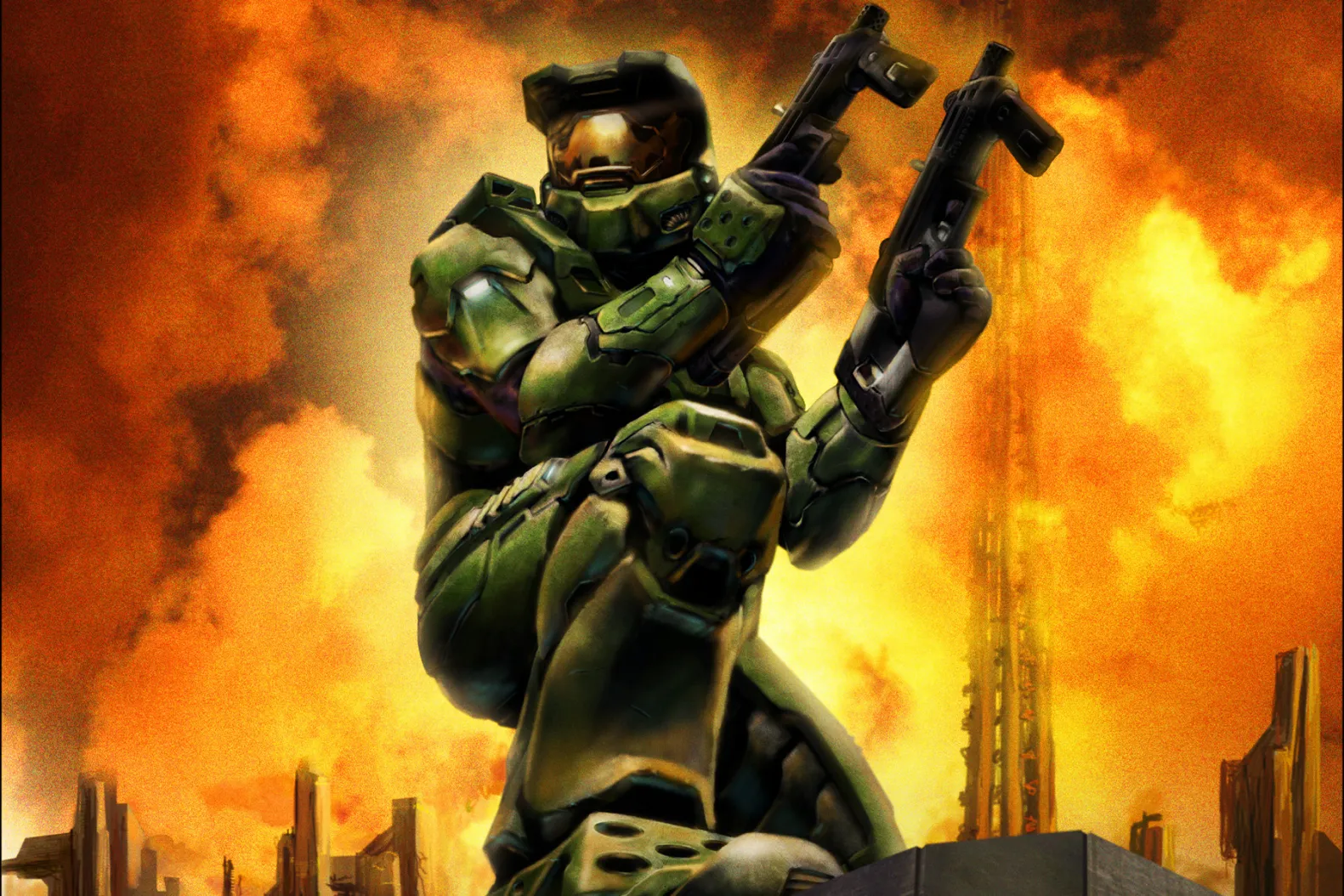
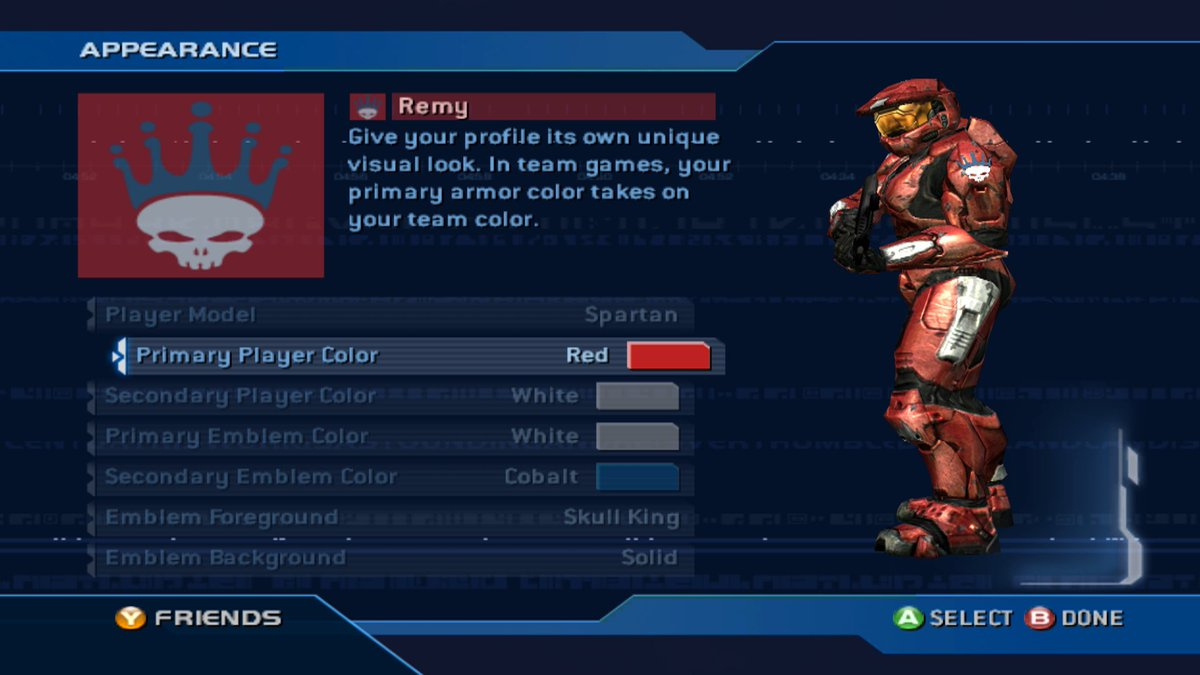
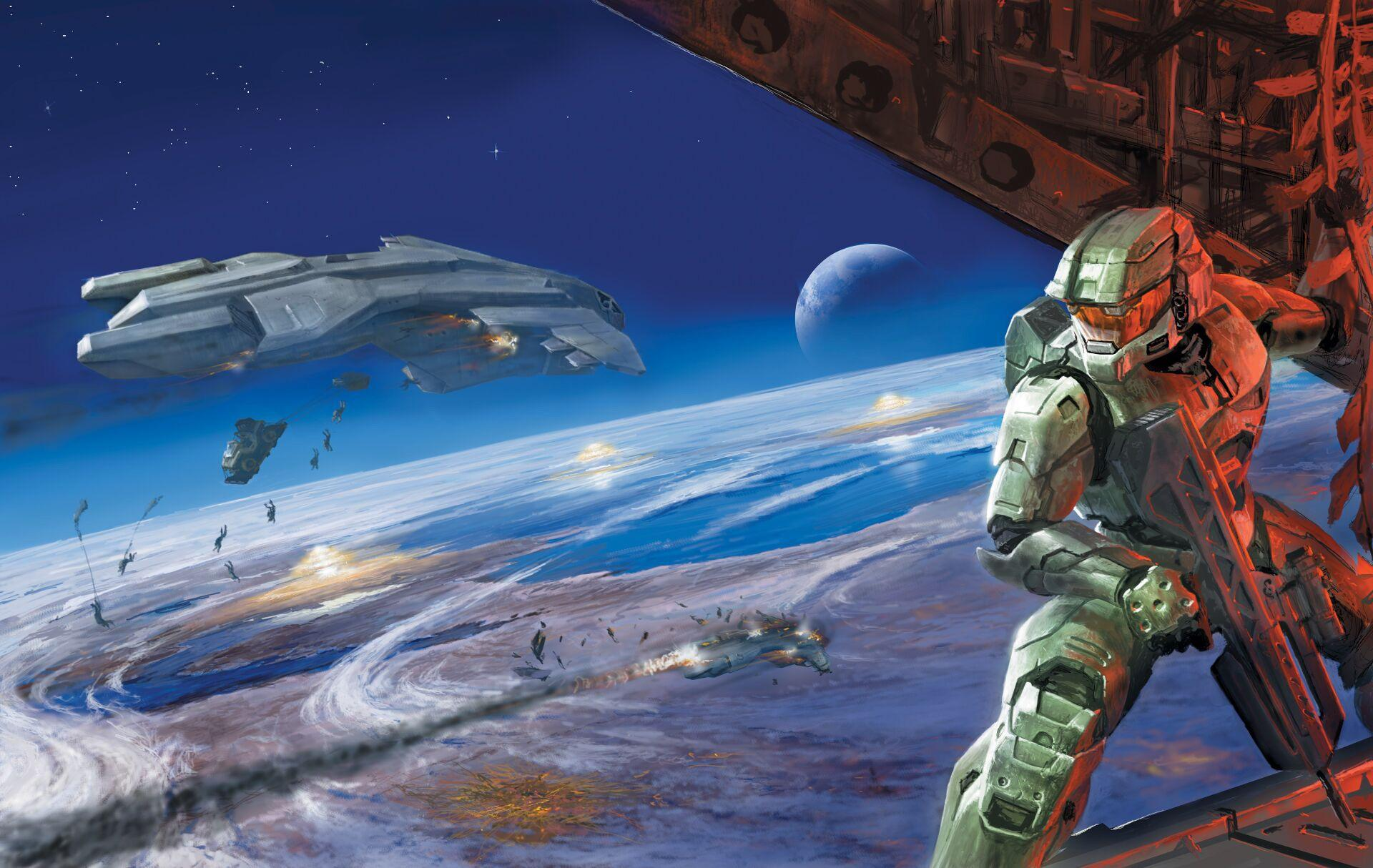
Halo 2 was bigger and more bombastic than it's predecessor on almost every front. 14 sprawling levels, with half of the campaign focusing on the Arbiter and the world of the Covenant, a bait-and-switch reveal that was absent from every facet of the game's marketing. The story was improved tenfold, with rich characters, worlds that felt lived-in, and snappy dialogue. It's funny, if I had a nickel for every time the second game in a revolutionary series included a bait-and-switch character that was initially hated by a vocal minority that would later grow to be loved by all, I would have two nickels, which isn't a lot but it's weird that it happened in both Metal Gear Solid 2: Sons of Liberty and Halo 2. The gameplay was expanded too. You could dual-wield certain weapons, hijack enemy vehicles, and finally pick up the coveted energy sword. The addition of online multiplayer skyrocketed the game's replayability and longevity. People who wouldn't typically be able to participate in multiplayer action, whether it be due to environment, lack of other systems to system link, or just lacking friends altogether, were hopping into what Microsoft coined the "virtual couch" of Xbox Live, launching into the game through Halo 2's skill-based matchmade servers. Custom games were back as well, allowing people from all over the world to duke it out in a lobby by your homies and for your homies. Player customization was also expanded. You could pick which species you wanted to play as whether it be Sangheili or Human. Secondary color choices were also added, as well as emblems that would display itself on your player character and your banner.
Don't even get me started on the music, either. Holy fuck, Halo 2's soundtrack, man. From the start, when you boot up the game and that Bungie logo goes up, and you hear a Steve Vai riff over the Bungie theme, you know you're in for some real rock shit. In 2002, three-time Grammy winner and producing icon Nile Rodgers founded Sumthin Else Music, a label that was to specialize in distribution and licensing of video game soundtracks, and Rodgers wanted Halo: Combat Evolved's score to be the first record the label put out. From there, O'Donnell and Salvatori teamed with Rodgers on Halo 2's soundtrack, rounding up a whole slew of artists to collaborate with, including Steve Vai, John Mayer, and Green Day, though Green Day's contribution ended up not fitting with the game, so it was scrapped.
"Nile came and said, 'Look: there's all these guys who are just really loving Halo, and for Halo 2 I can get you anybody you want. I can get you all sorts of people.' It was so mind-blowing to me".
Halo 2 saw a long list of collaborators from the wider music scene, not only on the game's soundtrack, but the game itself, especially from those in the nu metal space. Most notable being Breaking Benjamin's quadruple-Platinum track "Blow Me Away" which appears during a massive combat arena in the Mausoleum of the Arbiter. Benjamin Burnley was a huge fan of the first game, and jumped at the opportunity to work on the second one. In the past few years, the band has really leaned into the fact they made the track, even going as far as to have a Master Chief cosplayer on stage when they performed at a recent festival. The track that plays during the Arbiter's Ghost battle with the heretic leader is a track called "Follow", part one of a four piece suite by Incubus titled Movements of The Odyssey. And of course, while not in the game, Hoobastank have a track titled "Connected" featured on volume 1 of the soundtrack. 6 original tracks by 3 nu metal titans has to be a record somehow, right?
It's hard to put Halo 2's legacy into words. I know I had such a different experience than most, especially since I played it so late, so I struggled to put into words the impact it truly had on the industry and people as a whole.
So I didn't.
Instead, I asked prominent music fans in the Halo creator sphere, and prominent Halo fans in the music sphere about their experiences, and how Halo 2 impacted them. Here are some of my favorite responses.
Q: What was your first experience playing halo 2 like? What stood out to you?
A: "Oh man, talk about a wild experience. I would've been, what, 10 years old? My step father at the time had wanted to connect with us in some way so he bought an Xbox and Halo 2. He hooked it up and tried to play with us, but was so bad that he crashed out and never played it (or used the Xbox) again. Bi-polar step parent: 0, 10 year old: 1. Halo 2 was responsible for a lot- but primarily for bringing my younger brother and I closer together in a broken home. We spent hours just playing the campaign and customs over and over and over again. We didn't have Xbox Live, so no online multiplayer was even considered at the time. We were used to playing games and taking turns on the Nintendo 64, GameCube and Gameboy, so Halo was a whole new world to me. Split Screen- hello?? But as for Halo 2 in general, I just immediately fell in love with it. The music, the chief, the covenant, the cutscenes, storytelling- all of it. There truly was nothing like it at the time for me."
-HaloBoxStudios, Machinima Creator
A: My first instance of playing Halo 2 was when I was about 4 years old, and while I don't remember much of it, I distinctly remember my dad getting stuck on The Library for a long time. He used to come into my room early Saturday morning to play it and that's always a fond memory. My first play-through by myself was when I was about 10, and I remember getting to the end and being blown away by the ability to play as both Chief and Arbiter and the ability to dual wield weapons.
-Bryce, Vocalist for Cloud Casket
Q: what's your favorite memory playing halo 2?
A: My favourite memory is a recent one, I took my girlfriend through the game for her first time. She played CE beforehand, but never the rest of the games. Her and I enjoying the game together--her being amazed by the game--is my favourite thing ever.
-Goosewasinuse, 3D Artist, Developer
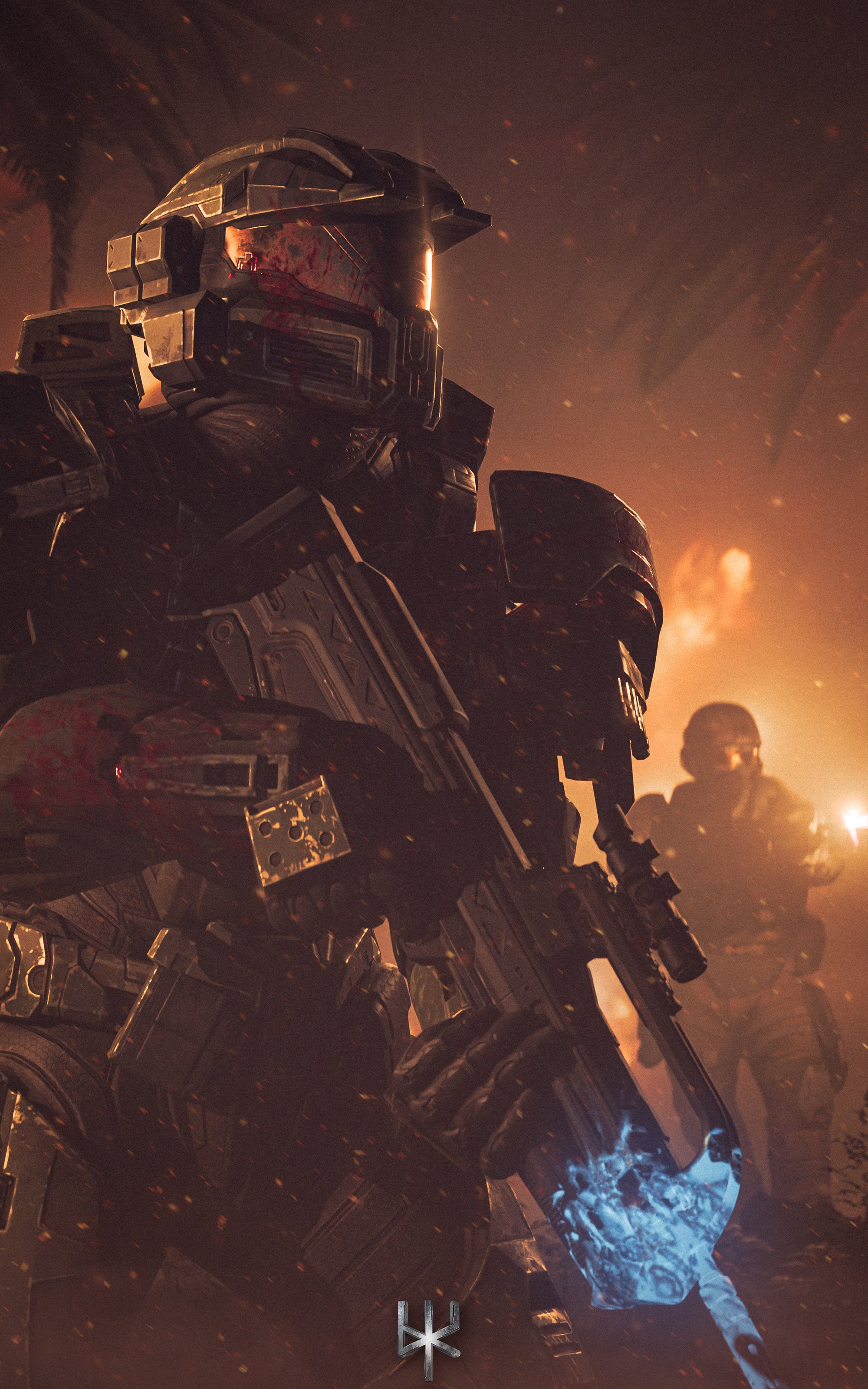
A: The moment I booted up Halo 2 Anniversary for the first time as a 14 year old, knowing I was going to be able to fully grasp the depth of its story. I had lost track of my OG copies of Halo 2 and otherwise had no interest in fully completing it up until that point, but when I first played through H2A in its entirety in one night, I remember ending that night simply slumping back on my couch and realizing how much this franchise was going to impact my life going forward.
- Austin , Founder/Creative Director at JumperScape Media
A: The memory that sticks out to me was easily the first encounter with the Flood. Like I said earlier Halo 2 was the first in the franchise I ever played but it was also the first Halo title I owned as well, which means I didn’t see the Flood in Halo CE previously. I had no idea what to expect and even as someone who was raised watching zombie films, fighting them at such a young age was still TERRIFYING. I was officially too spooked to finish the game by the time I got to the mission High Charity and I didn’t actually complete Halo 2 until a few years later into my early teens since by then I was used to fighting the Flood in Halo 3.
- Dean, Splitjaw Guitarist
And of course, I had to ask about the music and what their favorite track was.
Q: How did halo 2's music add to the experience playing the game and what's your favorite track from the soundtrack?
A: Halo 2’s sound track of course kept the iconic sense of ancient wonder but there was a sense of action that’s so unique to it vs the rest of the franchise. The rolling drums with some light accompaniment by guitars during sections of Outskirts especially stick out to me and come on, Breaking Benjamin during the massive battle section in Gravemind? That’s a cheat code. I know people are going to expect the leader of the Halo hardcore band to have some deep-cut ball-knower take here but I’m not gonna overthink this - it’s the Mjolnir Mix main theme. You just can’t beat adding Steve Vai’s wailing guitars to an already epic track. However I do want to give an honorable mention to "Breaking the Covenant" from the Halo 2 Anniversary soundtrack as well; Periphery is my favorite band of all time so when you add Misha Mansoor’s furious djenting to the all-out battle section in Gravemind, it’s one time where I’m switching to the Anniversary soundtrack (I still love you Breaking Benjamin).
- Dean Matza
A: Halo 2 would not be what it is without its score. Everything from the main menu music to the music playing in the final mission, everything feels incredibly unique, atmospheric, and huge, if that makes sense. It added to the sense of scope the game already had. Obviously we can't forget the song Breaking Benjamin made for it. "Blow Me Away" is probably my favorite song from the game but my favorite piece from the actual score would either be "Ghosts of Reach", "The Last Spartan", "Heavy Price Paid", or "Remembrance".
-Bryce
A: "Halo 2's music still stands as my favorite video game soundtrack ever. It can go from making you feel like a complete and total badass, but also like you wanna kill yourself (in the best way possible. Maybe dont use this part) [die? It makes you wanna die its so sad] Heavy Price paid is one that always sticks with me. After the story progresses to a point where you find out you're fighting for the wrong guys (21 year old spoiler alert, sorry) this song kicks in at the start of the mission, and it just hits you like a truck. Same goes for the end of the mission Delta Halo(?) After you beat one of the big bad prophets, the covenant glass (Blow up, sorry I'm using a lot of nerd terminology right now) the area near chief and he seemingly dies. The music that played during that cutscene left me feeling so helpless. Talk about a roller coaster of emotions. But also- the elephant in the room- Blow Me Away. Hearing that for the first time really kicked of my music journey. Their album We Are Not Alone was on repeat on my iPod. Then once Phobia came out, we were really cookin'. Those albums had the same thing that halo did for me: range. I could go from feeling like a total badass at one point and then two songs later– well, you get the point. I love you Rain. Also side note but when Halo 2 Anniversary came out, the fact that they got the dude from Periphery on a song is fucking wild.
Favorite track is a near impossible question for me. So many songs hold different good things for me.. if i had to do some highlights, though- its gotta be "High Charity", "Remembrance", "Heavy Price Paid" and "Peril". "Peril" holds a special place in my heart because it is (to me) the quintessential 'Machinima' song. But if im not giving all the praise to the bigoted lunatic that is Marty O'Donnell, I think the cake has to go to "Follow" by Incubus. I know I gave breaking benji a lot of praise here, but Incubus had just as much influence on my music tastes as they did. I remember reloading the mission this song played in over and over and over again just so I could listen to an extended version of it. But top song? "Epilogue". What a great great song. Did you know that John Mayer hopped into the studio to lay down the guitar for that one? It took me years to learn that, but once I found that out, I felt stupid for not realizing it sooner."
-HaloBoxStudios
A: The music is iconic, and the experience isn't the same without it, like the needle drop of "Heretic, Hero" in the delta halo cutscene had a ton of sauce. Which also happens to be my favourite track.
-Goosewasinuse
A: Halo 2's soundtrack is in my--and any reasonable Halo fan's, in my opinion--top 3 all-time favorite game soundtracks. I have a soft spot for film or game soundtracks that feel as though they can tell the story you're experiencing all by itself. After playing the game, Halo 2's soundtrack perfectly tells the story of Earth being on its last legs, the Covenant collapse, the return of the Flood, and everything in-between. It gives a sense of mystery, horror, and wonder that I don't think any other soundtrack aside from Halo 4 has given me.If we're talking about the entirety of the soundtrack, including the tracks that never made it into the game officially, then the Movements of the Odyssey. They tell a whole story themselves and I love the musical journey. If we're talking exclusively game soundtracks, then "High Charity". The droning sounds of the choir in the background and the mystical synth along with it makes me think of what life within the Covenant was like, almost like this is one of their hymns.
- Austin
Halo 2 is nu metal to the core. Not only in soundtrack, but in nature. Scrappy and jagged-edged, but loud and in your face, unafraid to make it's presence known, spitting in the face of the hellish conditions it was created under. It quite literally revolutionized what was already revolutionary. Online multiplayer console FPS games are taken for granted today, but Halo 2 paved the way for them.
Happy Birthday, Halo 2, you troubled masterpiece. You're finally old enough to legally drink, but you were badass enough to do it from the start.
Last year, I teamed up with Holiday Kirk to release a T-Shirt commemorating Halo 2's 20th anniversary. You can pick that up at the Nu Metal Agenda Merch Table here.