
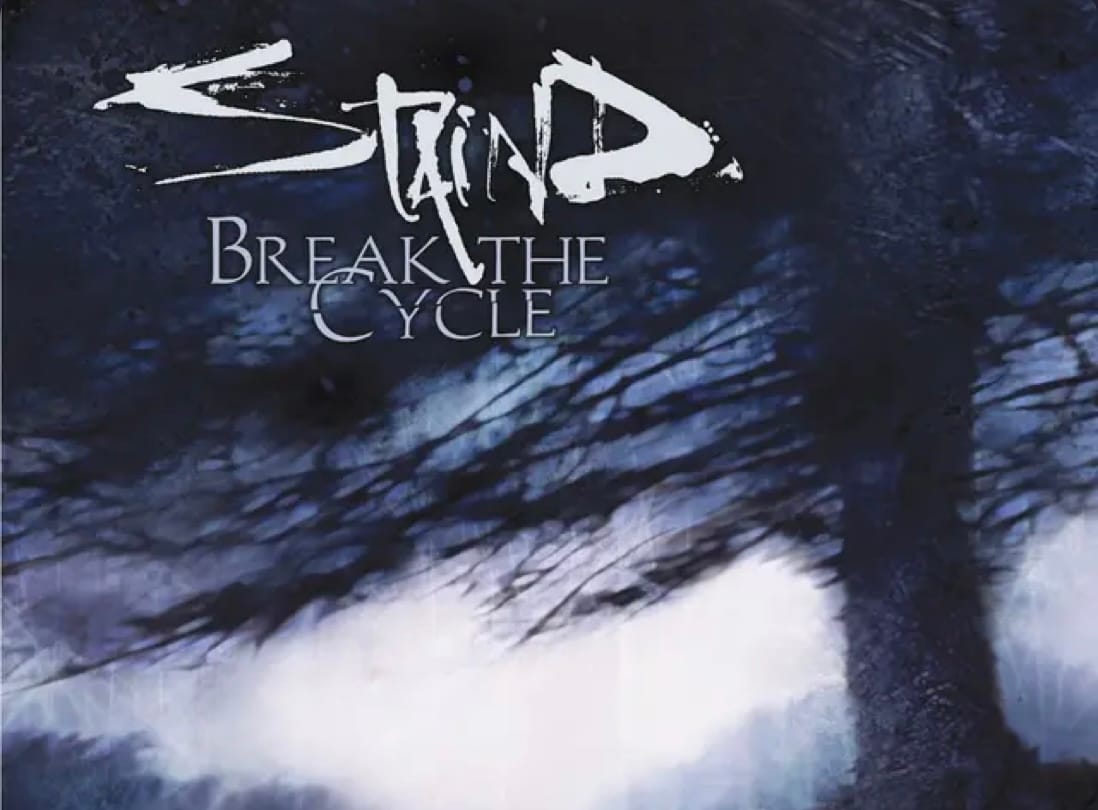
Staind's Break The Cycle has been in and out of my life for as long as I can remember. Appearing vaguely through the gaps of my childhood memory is “Outside” playing through the speakers of my mother’s ‘98 Toyota, or a live performance of “It’s Been Awhile” playing on a VHS tape. It wasn’t something I thought about frequently, simply another sound in my mother’s large array of music.
It wasn’t until years later that this album found me again. The same CD from all those years ago, with its now cracked case and faded booklet, became a sort of lifeline in a time where I was searching for one. Every track on this album spoke to me in a different way. It’s angry, confused, depressed, and frustrated, but each song explains a different reason why. Sure, we all know and love “Outside” and “It’s Been Awhile,” but this record has so much more to offer beneath its radio hits.
There’s quite a few that stick with me the most, starting with the second track, “Pressure”. As the title states, this song is about the immense amount of pressure frontman Aaron Lewis was under while completing this album. The stress of trying to wrap up the record, while also living up to the expectations of their previous album Dysfunction, would often lead Lewis into having panic attacks.
“My head hurts, this shit isn’t getting me high.
My chest feels so tight, am I going to die?
My stomach’s in knots and the room starts to spin as I wait for this Valium to slowly kick in.”
This bridge replicates the experience of a panic attack, flipping between the physical effects and the mental strain as Lewis claws onto his addiction to calm himself down. It’s an important commentary on the social expectations of artists, and what those expectations can force a person to endure.
The following track “Fade” takes a much more mellow approach. As opposed to the fast-paced riffs and assertive vocal delivery on “Pressure”, this song is slower, seeming to roll along with a simple repeating bass riff. It tells the story of Lewis’ parents neglecting him, forcing him to deal with his thoughts alone as a child.
“So where were you with all this I was going through?
You never took the time to ask me just what you could do.”
His vocal delivery makes him sound defeated, yet resentful. He’s coping with not only his damaged psyche due to this lifelong neglect, but the crushing guilt of not being able to shake the anger towards his parents as well. Much like the end of this song, he wishes for these feelings to just fade away.
Track five, “Change”, is a display of the complexity inside your own head. Telling the listener that, no matter how hard you try to bottle your emotions and deal with it yourself, it’s going to burst eventually.
“If ever you have said to me before that I would lead this life that I am living now, I guess it’s all so strange.
To feel the way I do inside and have so much that I could feel some pride for in my life, so why is it that I feel like this?"
This first verse is Lewis reflecting on himself. He’s looking at what he has, the art he's created, the lives he’s impacted, and is still uncertain as to why it isn’t enough to fix the torment he’s feeling.
“I try and try to break away from all the hate i’m feeling for everyone of you that’s ever done me wrong.
I need to justify the reasons for the way i’m living.
I guess I can’t, cause I don’t feel like I deserve.”
The second verse is an outward reflection on his environment. He’s burdened by the hate he’s encountered from people in his life, yet he feels guilty for being unable to break away from it. He doesn’t feel like his anger is justified, so the guilt continues to eat at him.
“So now the waves, they have subsided and my soul is bleeding.
I can’t take away all the shame I feel, forgive me.”
This is the fall after reaching your limit. Looking at everything you’ve done, everything you’ve destroyed as a result of your own instability, and being overwhelmed at the realization of everything you've jeopardized and lost. The different verses of this song follow the pattern of a mental breakdown, building up into this big crash at the bridge, and steadying back out afterward as you deal with the mess.
“Epiphany”, track seven, is a more frequently overlooked piece of this album. It’s a slower, softer acoustic track that many tend to bypass in favor of the excitement of the ones surrounding it. The lyricism, however, sets it up as one of the most beautiful reflection pieces on this album.
“So I speak to you in riddles ‘cause my words get in my way.
I smoke the whole thing to my head and feel it wash away.
‘Cause I can’t take anymore of this, I wanna come apart.
And dig myself a little hole inside your precious heart.”
Lewis is aware of his own self-destructive behavior, but doesn’t know how to find a way out of it. He yearns to have someone understand what he’s lived, why he’s like this, but he can’t bring himself to confront it, which continues his path of self sabotage.
“For You,” the tenth track on this album, takes the reoccurring topic of his childhood neglect and approaches it from the perspective of the child in question. It’s much angrier, louder, and was designed with this aggression in mind. Lewis stated that “it’s totally written for the kids, it’s for them to turn up real loud so that their parents can hear what I'm saying.”
“To my mother, to my father, it’s your son or it’s your daughter.
Are my screams loud enough for you to hear me?
Should I turn this up for you?”
Taking the inspiration for this song from his own upbringing, as well as from the stories fans have told him about their own experiences, he made it as a sort of anthem for these kids to vent their anger through.
“All your insults and your curses make me feel like I’m not a person.
And I feel like I am nothing, but you made me, so do something.
Cause I'm fucked up, because you are.
I need attention, attention you couldn’t give.”
The bridge takes a very blunt approach, stating exactly how it feels to fight for the attention of someone who is supposed to love and support you. No sugar coating, no metaphorical wordplay, just the ugly truth delivered straight to the cause: You’re not happy with how I turned out, but it’s a direct reflection of your lack of effort.
“Waste,” the second to last track, tells a much darker story. While on tour, Lewis encountered the mother of a fan who committed suicide. She came to the band’s tour bus, emotional and insistent on speaking to Lewis, wanting to ask for answers that he didn’t possess.
“Your mother came up to me, she wanted answers only she should know.
Only she should know.
It wasn’t easy to deal with the tears that rolled down her face.
I had no answers ‘cause I didn’t even know you."
This incident frustrated Lewis for many reasons. For starters, he was uncomfortable being put in this situation for someone he never even met. Then the encounter started to dig into his mind, forcing him to think what could’ve led to this, and that feeling built from frustration, to pondering, to anger near the end of the song:
“Did daddy not love you? Or did he love you just too much?
Did he control you? Did he live through you at your cost? Did he leave no questions for you to answer on your own?
Well fuck them, and fuck her, and fuck him, and fuck you, for not having the strength in your heart to pull through.
I’ve had doubts, I have failed, I’ve fucked up, I’ve had plans, doesn’t mean I should take my life with my own hands.”
This song was created as a reply to the situation, acknowledging the complexity of the matter in Lewis’ own frustrated way. It pushes the question of why such a thing could happen, but directed back at the questioner.
The final track, “Take It”, is directed to you, the listener. Its message is clear, the only person who can help you is yourself.
“Everything that I can say to you won’t help you.
Everything you need is right in front of you, just take it.”
While this music can be an assist, Lewis is driving home the point that he doesn’t have the answers you need. Just like the listener, he struggles, but from his own experience he has learned the only thing you can do is fight for yourself and make it through.
“I once felt that way.
Nothing I could say made it go away.
I lived through this, I still feel this, I just live for my tomorrow.”
Break the Cycle is the story of just that: breaking away from generational trauma, abuse, addiction, and everything that weighs you down. The process isn’t pretty; it’s miserable, tearing you down at every corner as you deconstruct what made you this way. This album is so important because it’s an outlet for those who can’t cope with those feelings alone. Whether it takes one listen, or over a year’s worth of listens, this album will do exactly what Lewis says as it’s closing off: it’ll make this go away.